 VacancyPool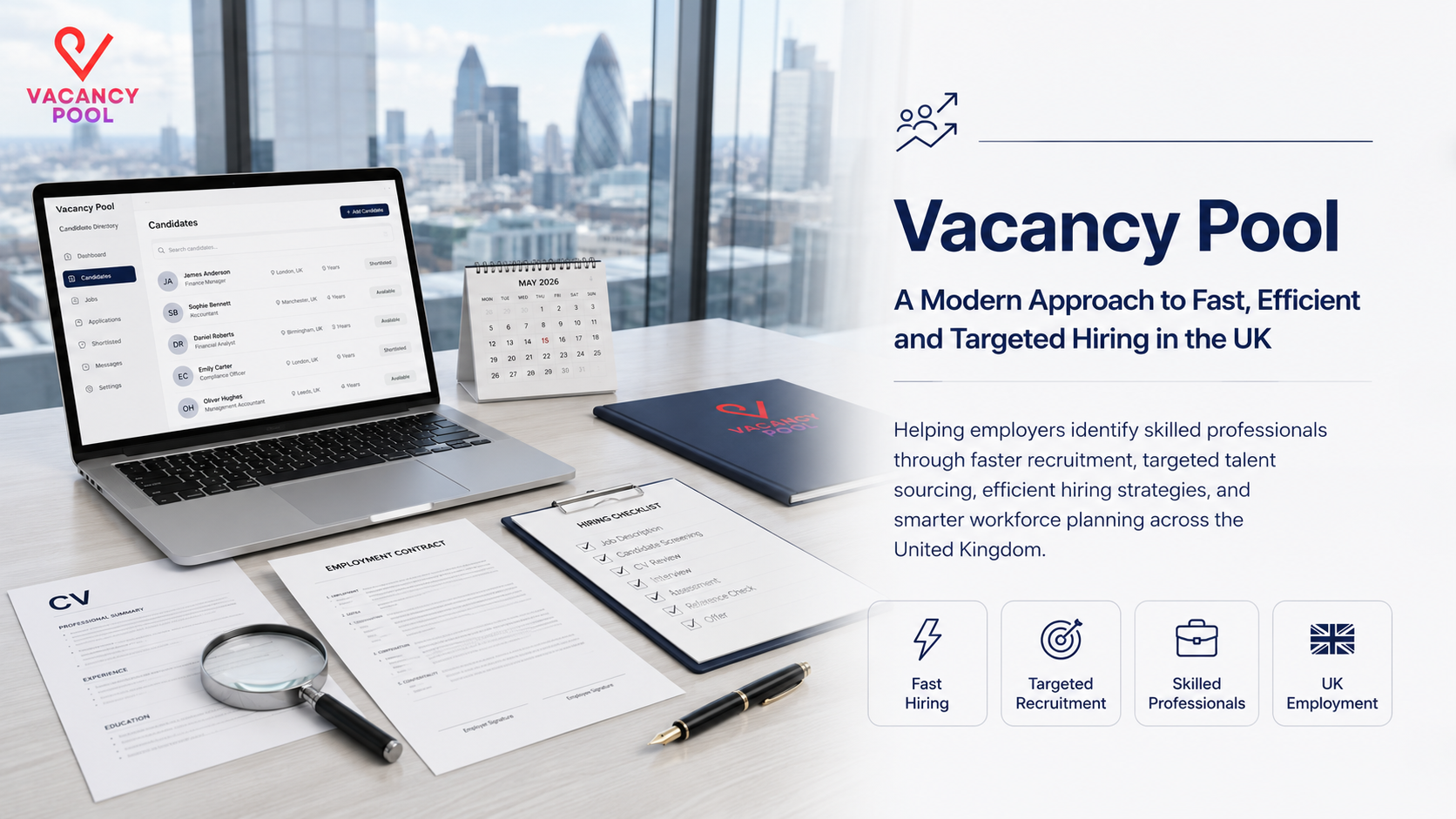
In today’s fast-moving employment landscape, organisations can no longer rely on traditional, time-consuming hiring processes. Competition for skilled talent has increased significantly across nearly every sector, and businesses are under constant pressure to fill critical roles quickly without compromising on quality. In response to these challenges, Vacancy Pool has become one of the most effective and widely adopted hiring methods across the United Kingdom.
Vacancy Pool focuses on identifying, approaching, and securing suitable candidates in a more streamlined and proactive way. Instead of depending solely on passive applications, employers engage directly with potential talent, ensuring faster hiring cycles, better candidate quality, and improved alignment between job roles and professional skill sets.
For both employers and job seekers, this approach has reshaped how recruitment operates in the modern labour market.
Understanding the Concept of Vacancy Pool
Vacancy Pool refers to a hiring method where employers or recruitment specialists actively source and engage candidates for specific roles without relying exclusively on indirect or long listing processes.
This method is designed to reduce delays, improve hiring accuracy, and ensure that organisations can access the most suitable candidates in a competitive market.
Unlike traditional recruitment approaches, Vacancy Pool focuses on:
- Proactive candidate sourcing
- Targeted talent identification
- Faster interview-to-hire processes
- Improved role matching accuracy
- Reduced dependency on open job applications
As businesses continue to face skill shortages in key industries, Vacancy Pool has become an essential strategy for securing high-quality professionals efficiently.
Why Vacancy Pool Is Becoming Increasingly Important
The modern job market is highly competitive, and skilled professionals are often approached by multiple employers simultaneously. This creates challenges for organisations relying on slower recruitment methods.
Vacancy Pool helps address these challenges by allowing employers to engage with talent early in the process and build stronger candidate relationships.
Several factors have contributed to its growing importance:
- Increasing competition for skilled candidates
- Rapid growth in specialised job roles
- Time-sensitive hiring requirements
- Expansion of remote and hybrid working models
- Rising expectations from both employers and candidates
- Skills shortages in technical and professional sectors
As a result, businesses are increasingly adopting Vacancy Pool strategies to remain competitive and efficient in their hiring processes.
How Vacancy Pool Works
Vacancy Pool follows a structured yet proactive process designed to identify and secure suitable candidates quickly.
1. Role Identification and Requirement Analysis
The process begins with a clear understanding of the job role, required skills, and organisational expectations. Employers define both technical and behavioural requirements to ensure accurate candidate targeting.
2. Talent Sourcing
Instead of waiting for applications, recruiters actively search for suitable candidates using professional networks, databases, and industry platforms.
3. Candidate Engagement
Potential candidates are approached directly and informed about relevant opportunities. This step focuses on building interest and assessing availability.
4. Screening and Evaluation
Candidates undergo structured evaluation to assess skills, experience, qualifications, and overall suitability for the role.
5. Interview Coordination
Shortlisted candidates are presented to employers, and interviews are arranged efficiently to speed up decision-making.
6. Offer and Placement
Once a suitable candidate is selected, the offer process is managed to ensure smooth onboarding and successful placement.
Advantages of Vacancy Pool for Employers
Vacancy Pool provides several key benefits that make it a preferred strategy for modern organisations.
Faster Hiring Process
By eliminating long waiting periods associated with traditional applications, organisations can fill roles more quickly.
Access to Passive Talent
Many highly skilled professionals are not actively applying for jobs but may be open to new opportunities if approached directly.
Improved Candidate Quality
Targeted sourcing ensures that only relevant and qualified candidates are considered.
Reduced Hiring Costs
Faster placements and better role matching can reduce long-term recruitment expenses.
Stronger Workforce Alignment
Direct engagement allows employers to better assess cultural fit and long-term potential.
Benefits of Vacancy Pool for Job Seekers
Vacancy Pool is not only beneficial for employers; it also creates significant advantages for candidates.
Access to Exclusive Opportunities
Many roles are filled through direct approaches and never advertised publicly.
Faster Career Progression
Candidates can move through hiring stages more quickly compared to traditional application methods.
Better Role Matching
Direct engagement ensures that job opportunities are aligned with individual skills and career goals.
Professional Guidance
Candidates often receive personalised feedback and support throughout the recruitment process.
Industries Where Vacancy Pool Is Commonly Used
Vacancy Pool is widely used across multiple sectors where speed and precision are critical.
Financial Services
Banks, investment firms, and insurance companies rely on Vacancy Pool to secure skilled professionals quickly.
Technology Sector
Fast-moving tech companies use direct sourcing to fill highly specialised roles.
Healthcare and Life Sciences
Healthcare organisations often require urgent hiring for clinical and administrative positions.
Engineering and Construction
Project-based industries benefit from rapid hiring solutions for time-sensitive roles.
Corporate and Professional Services
Businesses across various industries use Vacancy Pool to fill managerial and specialist positions.
Challenges in Vacancy Pool
While highly effective, Vacancy Pool also presents certain challenges:
- Requires strong talent sourcing capabilities
- Depends on accurate role definition
- Can be time-intensive for recruiters
- Requires market knowledge and industry expertise
- Needs strong communication and engagement strategies
Despite these challenges, its benefits often outweigh limitations when implemented correctly.
The Role of Recruitment Specialists in Direct Hiring
Specialist recruitment partners play an important role in making Vacancy Pool successful. Their expertise allows organisations to access wider talent pools, improve candidate quality, and streamline hiring processes.
Vacancy Pool supports organisations by identifying skilled professionals through targeted recruitment strategies and industry-focused talent sourcing. By understanding employer requirements and candidate expectations,Vacancy Pool helps create efficient and successful hiring outcomes across competitive sectors.
The Future of Vacancy Pool
As the labour market continues to evolve, Vacancy Pool is expected to become even more prominent. Advances in technology, data analytics, and artificial intelligence are making it easier for organisations to identify and engage suitable candidates.
Future developments are likely to include:
- AI-driven candidate matching
- Automated talent sourcing systems
- Enhanced data-driven recruitment decisions
- Increased use of digital talent platforms
- More personalised candidate engagement strategies
These advancements will further strengthen the effectiveness of Vacancy Pool in the coming years.
Conclusion
Vacancy Pool has become a vital hiring strategy in today’s competitive employment market. By enabling organisations to engage with talent proactively and efficiently, it helps reduce hiring time, improve candidate quality, and ensure better long-term workforce alignment.
For job seekers, it offers faster access to opportunities and more personalised career pathways. For employers, it provides a more strategic and effective way to secure skilled professionals.
As organisations continue to prioritise speed, accuracy, and efficiency in hiring, Vacancy Pool will remain a key component of modern talent acquisition strategies across the United Kingdom.




.png)